The Brand That Wasn't Right — R.J. Sloane
When I was researching Blood Justice, I kept circling back to one question: how did a man in the 1890s actually catch a rustler? Not in a shootout. Before that. At the fence line, with nothing but his hands and his eyes.
The answer turned out to be brands. Specifically, the ones that had been altered.
The Arizona Territorial Livestock Sanitary Commission appointed its first Livestock Inspectors — men some called Livestock Detectives — in March of 1891. Many of them came up through veterinary work, which is exactly why I made Grady Thatcher and his partner Deacon Colter veterinarians first. They already knew how to read an animal. Reading a brand was the same skill, turned toward a different kind of wound.
A rustler didn't just slap a new brand over an old one and hope nobody noticed. He picked a mark that could plausibly grow out of the original — same starting letter, similar shape — so a quick glance wouldn't catch it. But hair grows differently over scar tissue than it does over healthy skin. Run your fingers over an altered brand and you can feel the truth the eye misses.
That's the scene I want to share with you today. Grady and Deacon are still just cattlemen at this point — no badges yet, no idea how far this is about to go. They just know something's wrong with this herd.
Here's the excerpt.
"What about the brands?" Deacon asked, straightening from his examination of a sick steer. His hands were already stained with the reddish dust that clung to everything in the stockyards.
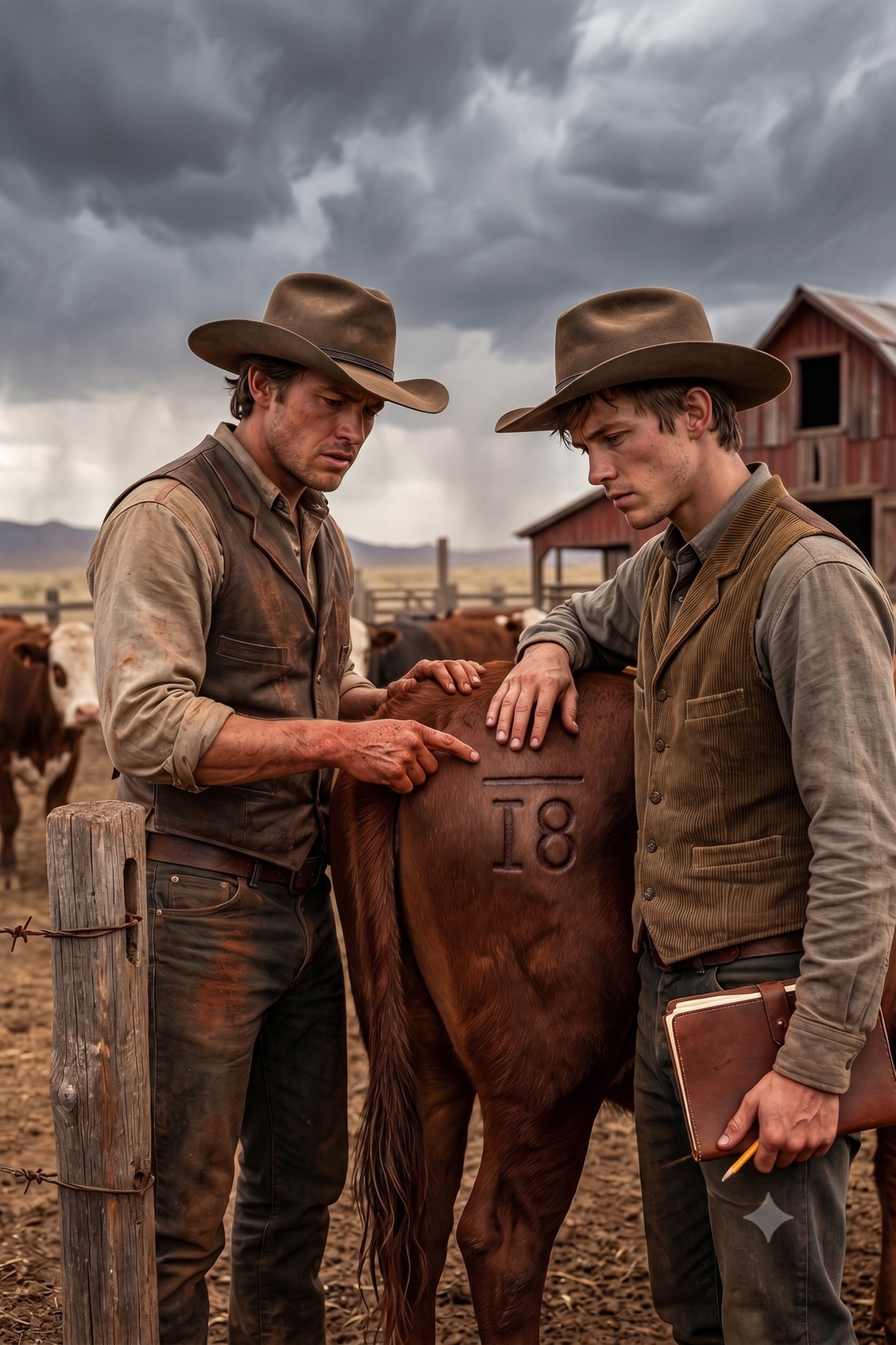
That's when I saw it. Walking along the fence line, I stopped beside a red Polled Shorthorn heifer and pointed to the mark on her left hip.
"Deacon, come look at this."
He joined me, studying the brand with the careful attention to detail that made him such a good veterinarian. The mark read "I Bar 8," but even from a distance, you could see something was wrong. The scar tissue was raised and irregular, not the clean lines of a properly applied brand.
"Feel along the edges," I said.
Deacon ran his fingers over the brand, his touch light and precise. The hair around the mark was coarse and grew in different directions, telling its own story. "Hair growth's different here. And here. This was burned over another brand."
My gut twisted like someone had driven a knife into it. I'd never seen it in person, but I'd imagined it a thousand times in my nightmares. The same sloppy, hurried work. The same arrogance of men who thought they were too smart to get caught.
"Check the others," I said, my voice tight.
We moved through the herd systematically, examining each animal with the thoroughness of trained investigators. I watched Deacon work — the careful way he ran his hands over each brand, the methodical notes he took, the systematic approach that never missed a detail. It was one thing that made us good partners. Where I saw the big picture, he caught the specifics that could make or break a case.
"This is organized," Deacon said as we finished our examination, wiping his hands clean with deliberate precision. "Calculated. Someone planned this carefully."
"Too carefully," I agreed.
"The original brand," I said, tracing the outline under the altered mark with my finger. The scar tissue felt rough and raised. "That's a 'T Bar 9.'"
Derek Gardner, who'd been watching us work, straightened with recognition. "Jack Thompson's brand. He's got a spread about twenty miles north of here. Good man, honest as the day is long."
"We need to ride out there tomorrow," I said. "See if he's missing any stock."
"That'd be Livestock Inspector work," Deacon pointed out.
"Then maybe we better take that job."
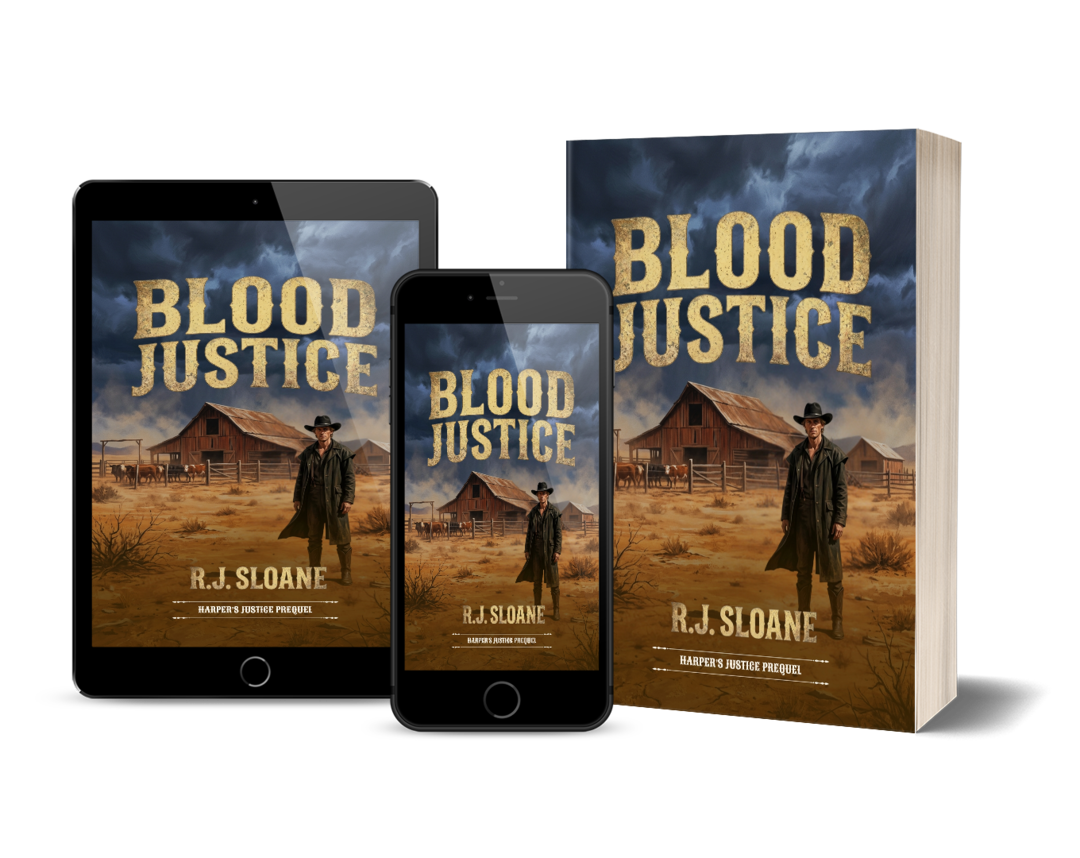
That's where I'll leave you — right at the edge of the decision that changes everything for these two. If you want to know what "taking that job" costs them, Blood Justice is waiting.